
Agate-Tempo is based on the Réséda directory: every registered agent in this database (permanent, contractual, doctoral student under CNRS contract) automatically has an account. The difficulty does not lie in creating the profile, but in the initial authentication and the correct setup of the leave cycle.
Janus Authentication and Common Configuration Errors
Access to Agate-Tempo goes through the Janus portal, the CNRS identity provider. The identifier corresponds to the Janus login (first name.last name or assigned variant), associated with the unique password of the identity federation. An agent logging in for the first time after starting their position must first activate their Janus account via the creation link received by institutional email.
The most common error occurs when the browser retains an expired session cookie. We recommend clearing the cache or using a private browsing window before any attempt. If the message “user not recognized” persists, the problem usually stems from a synchronization delay between Réséda and Agate-Tempo, which can take a few working days after administrative registration.
For agents attached to a mixed unit, the configuration of the associated laboratory in Réséda determines the display of rights in Agate-Tempo. Incorrect attachment leads to an empty leave counter or a validator missing from the hierarchical chain. Only the HR manager of the unit can correct this assignment.
To better understand the procedure for logging into Agate Tempo CNRS, it is important to keep in mind that each step depends on the consistency between Réséda and the Janus portal.
Setting Up the Annual Leave Cycle in Agate-Tempo

The Absences module of Agate-Tempo distinguishes several categories: annual leave, RTT days, exceptional leave (marriage, death, PACS) and special absence authorizations. Each category has its own counter, replenished at the beginning of the reference period.
CNRS agents benefit from 44 days per year (32 days of annual leave and 12 RTT days for full-time). This quota appears in the “Balances” tab of the module. If the counter displays an inconsistent value, three possible causes:
- The work percentage recorded in Réséda does not match the actual working hours, which skews the pro-rata calculation.
- The manager has not yet validated the initialization of rights for the current period, a manual operation at the beginning of the calendar year.
- A change of assignment during the year has generated a duplicate file, with the old and new laboratory each having a partial profile.
Submitting a request follows a precise workflow: the agent enters the period, type of absence, and an optional comment. The request goes up to the direct validator (team leader or unit director depending on local configuration). As long as the validator has not ruled, the request remains in “pending” status and the days are not deducted.
Leave Carryover and Information Obligation Since the August 2026 Reform
The reform that came into effect on August 13, 2026, profoundly changes the management of carryovers. The public employer must now formally inform each agent of the number of carried-over days and the deadline for use. This notification must be tracked (email, letter, official notification).
The information deadlines vary depending on the situation:
- For an agent on leave for health reasons or family responsibilities, the information must be provided within a month following their effective return.
- For unused leave due to service needs, the notification occurs before January 31 of the year N+1.
- Outside of these cases, the carryover is limited to unused rights from the first four weeks of annual leave per reference period, in accordance with European jurisprudence.
In Agate-Tempo, this evolution is concretely reflected in a more rigorous tracking of balances at the end of the period. The HR manager must extract the counters, identify the concerned agents, and generate the notification. The tool does not yet produce this notification automatically, which requires a semi-manual process via the export of data from the Absences module.
CNRS Time Savings Account and Interaction with Agate-Tempo
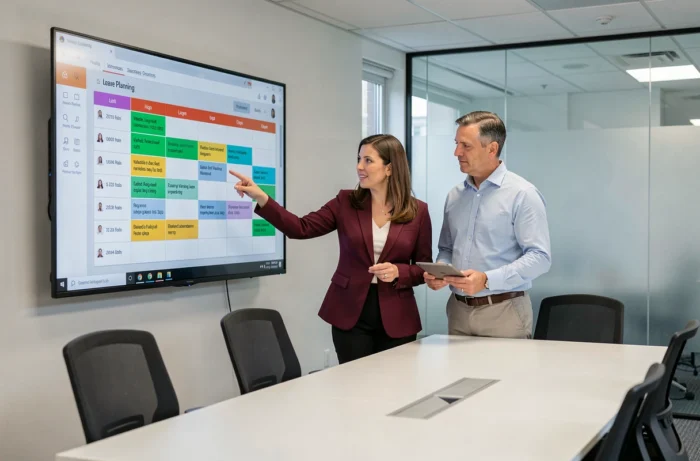
The mandatory submission of leave in Agate-Tempo conditions the opening and funding of the time savings account (CET). Without a history of regular submissions, the agent cannot demonstrate a positive balance eligible for savings.
The CET module of Agate-Tempo allows for funding the account at the end of the period, within the limit of the regulatory ceiling. The agent enters the number of days they wish to save, the manager validates, and the CET balance is updated. The process assumes that the balance of annual leave and RTT is stabilized, meaning that all requests for the period have been validated or rejected.
A common pitfall: an agent who submits their leave late (at the end of the year) and subsequently funds their CET risks having their request rejected if the validator has not yet processed the pending absences. We recommend regularizing all requests at least two weeks before the closure of the CET.
Management of Exceptional Leave and Special Absences
Exceptional leave (birth, marriage, death of a close relative) is not submitted in the same way as annual leave. The agent submits the request in Agate-Tempo by selecting the appropriate reason, then sends a supporting document to the HR manager by email. The manager then manually enters the absence into the system if the automatic workflow does not cover the relevant reason.
Special absence authorizations (administrative summons, mandatory medical exams) follow the same process. The tool does not verify the validity of the supporting document: this responsibility lies with the manager, who can refuse the entry if the submitted document does not match the declared reason.
The reliability of Agate-Tempo primarily depends on the rigor of each link in the chain: agent, validator, manager. A systematic and timely submission of absences remains the best lever to avoid counter anomalies and secure one’s rights, especially as deadlines for carryover or CET funding approach.