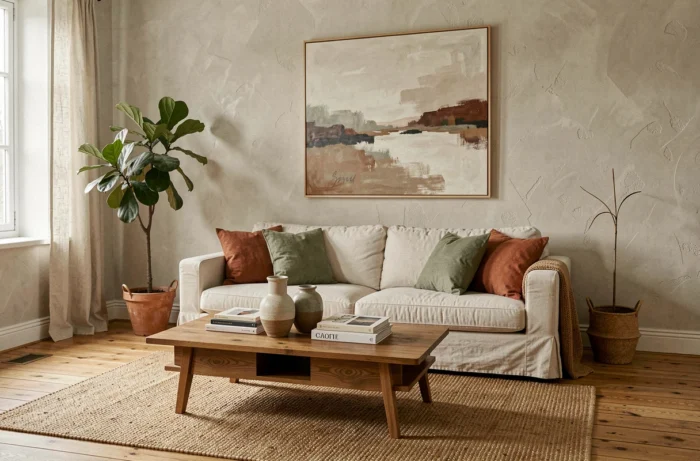
Transforming an interior is not just about choosing a sofa or repainting a wall. Behind every decoration project lie concrete decisions: the impact of colors on well-being, regulatory constraints related to energy renovation, and the choice of sustainable materials. This article compares the most common transformation levers to identify those that offer the best balance between effort and visible result.
Colors, materials, and layout: which transformation lever weighs the most
Three main categories of intervention recur in most interior decoration projects: changing the color palette, replacing or adding materials (wood, stone, textiles), and spatial reorganization of furniture. Their cost, implementation duration, and visual impact differ significantly.
| Lever | Implementation Duration | Relative Budget | Perceived Visual Impact |
|---|---|---|---|
| Color palette (paint, wallpaper) | One to three days per room | Low to moderate | Very high |
| Natural materials (wood, stone, linen) | Variable depending on the work | Moderate to high | High |
| Rearranging existing furniture | Several hours | Almost none | Moderate |
| Lighting (light points, temperature) | Several hours to one day | Low | High in the evening, moderate during the day |
Color dominates this comparison. It alters the perception of a space in just a few hours and remains the least expensive lever relative to the effect produced. In contrast, rearranging furniture, while free, generates a more limited impact if the volumes and shades remain the same.
To explore each avenue further and find decor inspiration on Niddou, simply cross these levers with the specific constraints of each room: natural light, floor area, daily use.
Color psychology applied to interior decoration
Research in environmental psychology shows that the hues of a space influence measurable physiological parameters: stress level, heart rate, concentration ability. This is no longer just a decorator’s intuition; it is a documented field of study.
Cool hues and cognitive rest
Muted blues and greens promote a state of calm. In a living room or bedroom, these shades reduce visual stimulation and facilitate recovery after a day of work.
A muted blue in the bedroom promotes relaxation better than a neutral white. White, often perceived as a safe choice, does not produce any particular calming effect. It remains a neutral background, without notable cognitive benefit.
Warm hues and conviviality
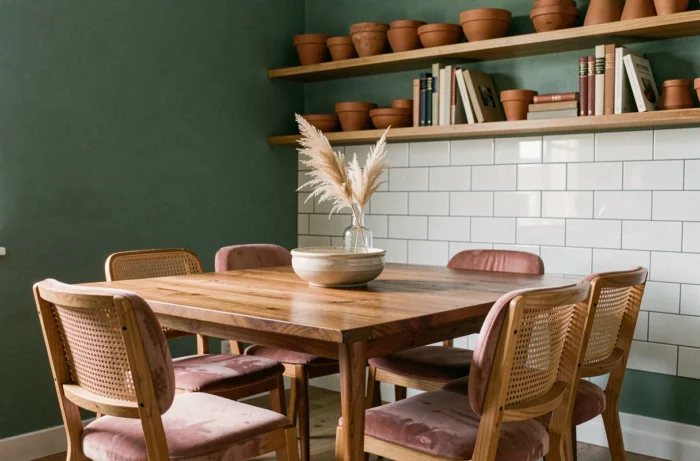
Ocher, terracotta, and burgundy (the Pantone 2025 color, Mocha Mousse, falls into this category) stimulate sociability. These shades work well in shared living spaces: living room, dining room, open kitchen.
Deep warm colors advantageously replace the dominant gray of past years. Contemporary design moves away from monochrome palettes to incorporate more pronounced contrasts between relaxation areas and activity zones.
- Bedroom and office: favor desaturated blues or sage greens for concentration and sleep.
- Living room and dining room: test an accent wall in a warm hue (terracotta, wine color) to anchor conviviality.
- Entryway and hallway: light and bright tones visually enlarge the space without requiring structural work.
Energy renovation and decoration: what the August 2026 decree changes concretely
Interior transformation projects that include insulation, ventilation changes, or heating equipment replacement are directly affected by the new rules that came into effect in September 2026.
Decree No. 2026-822 of August 25, 2026, reduces the number of isolated actions eligible for MaPrimeRénov’. Some insulation or ventilation work, previously eligible for individual funding, is no longer so since September 1, 2026. Energy savings certificates (CEE) are also being reconfigured.
For individuals considering a comprehensive redesign of their interior (removing partitions, insulating walls from the inside, installing new coverings), this restriction changes the budget equation. An isolated action that is no longer eligible must now be fully financed from personal funds or included in a broader work package to remain supported.
Mandatory RGE certification starting January 2027
As of January 1, 2027, the company billing for energy renovation work that is subsidized must itself be RGE certified, even in the case of subcontracting. This obligation, specified by the decree of August 12, 2026, concerns MaPrimeRénov’, eco-PTZ, Anah aids, and CEEs.
In practical terms, a decorator or interior designer coordinating a project that combines aesthetics and thermal performance must ensure that the main contractor holds the certification. Checking this point before signing a quote avoids surprises regarding financing.
Natural materials and organic lines: beyond the 2025 decor trend
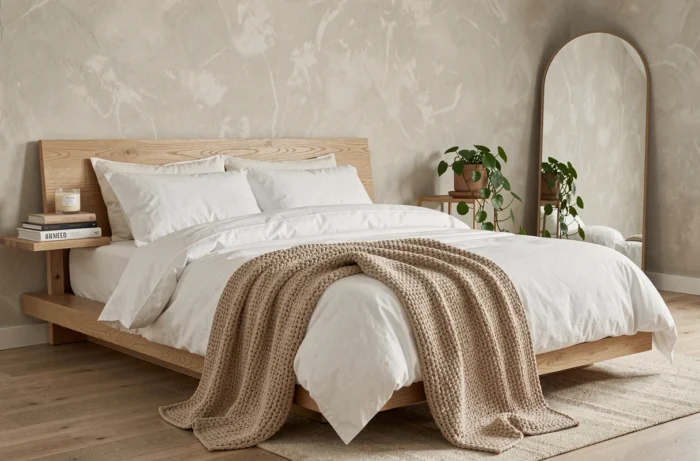
Dark wood (walnut leading), curved shapes, and raw textiles (linen, boucle wool) did not appear this year. Their presence in contemporary interiors has gradually strengthened over several seasons.
Walnut and organic lines reflect a need for sustainability rather than a fashion effect. Furniture with rounded corners reduces the visual rigidity of a room. Dark wood, combined with warm shades, creates a depth that white lacquered finishes do not produce.
- Living room: a solid walnut TV unit or bookshelf anchors the room without overloading the decor.
- Bedroom: a curved headboard in boucle fabric softens the space and enhances visual comfort.
- Bathroom: extending the tiling from floor to walls, in large tile formats, simplifies maintenance and unifies the volume.
The choice of these materials directly depends on the use of the room. Untreated walnut in a kitchen exposed to water splashes ages poorly without appropriate finishing. Each natural material requires specific maintenance that must be anticipated before purchase.
The gap between a coherently transformed interior and a simply redecorated one often comes down to a single factor: the hierarchy of choices. Start with color, check regulatory constraints if energy work is planned, and then select materials based on the actual use of each room. This sequence produces more sustainable results than an accumulation of impulsive purchases.