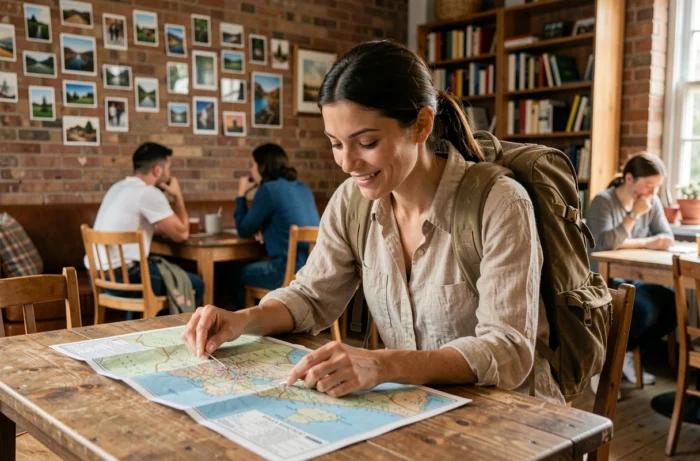
Booking a flight to Bangkok on a Tuesday evening, staying with locals in Medellín, cooking in a hostel in Portugal: this is not a marginal lifestyle. The majority of long-term travelers completing a round-the-world trip in 2024 are neither retirees nor high-income digital nomads. They are people who have learned to manage every expense item, sometimes down to the week. Traveling around the world without breaking the bank relies on concrete choices, not on a collection of generic tips.
Booking transportation for independent travel: the shift that changes the budget
The classic reflex is the flight + accommodation package sold by an online agency. On paper, it’s simple. In practice, you lose all negotiating leverage on each item.
An analysis of tourism in Cyprus shows that the share of organized trips dropped from 63.8% in 2013 to 35.3% in 2024, while independent travel (transport and accommodation booked separately) rose from 36.2% to 64.7% over the same period. This is not a coincidence: booking each element separately allows you to manage your budget on a day-to-day basis.
When you book a direct flight on a comparison site and then a room with a local host via a local platform, you tailor each segment to your financial reality. A low-cost flight to Southeast Asia followed by a local bus costs a fraction of the agency package. You can find useful resources to prepare this type of itinerary on generation-voyageurs.com, especially to identify the stages where independent travel really makes a difference.
The price to pay: research time and tolerance for the unexpected. Feedback varies on this point, with some travelers finding planning exhausting, while others see it as part of the fun.
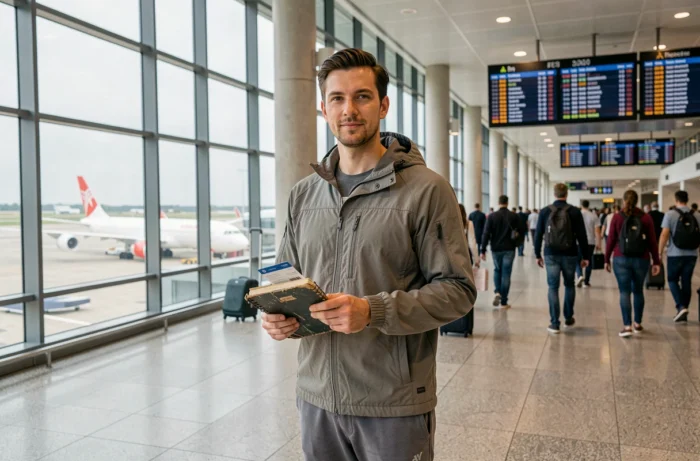
Low-cost living destinations: where the daily budget shrinks less quickly
You can optimize your flights as much as you want; if you spend three weeks in Tokyo or Zurich, the budget will explode. The choice of country weighs more than any booking trick.
Southeast Asia (Vietnam, Cambodia, Laos), certain regions of Latin America (Bolivia, Guatemala, Colombia outside Cartagena), and parts of the Balkans offer a daily cost of living that allows you to stretch your budget for a long time. Accommodation, food, local transport: each item remains low.
How to balance between expensive destinations and accessible countries
The idea is not to limit yourself to the cheapest countries. You can insert a week in Japan between two months in Southeast Asia, as long as you have calibrated the overall budget in advance. Alternating expensive areas and accessible areas on the itinerary allows you not to sacrifice the destinations that really matter.
- Place the most expensive stages at the beginning of the trip, when the cash flow is still intact, and save the low-cost living countries for the end of the journey.
- Plan a safety margin for unexpected medical expenses or seasonal price increases, rather than closing a theoretical budget down to the last cent.
- Check the actual cost of visas and mandatory insurance by country: these fixed costs are often underestimated and can represent a significant item on a round-the-world trip.
Slow travel and reducing movements: the most underestimated lever
Changing cities every two days guarantees that you will blow your budget on internal transport. A night bus in Peru or a domestic flight in Indonesia, repeated ten times a month, ends up costing as much as an intercontinental flight.
Staying longer in one place mechanically reduces the daily cost. You negotiate a weekly rate in a hostel or with a local host. You find local markets, cook, and avoid tourist restaurants. You walk instead of taking taxis.
Slow travel is increasingly appealing to European travelers, according to trends observed in recent years. It’s not just a stance: it’s a calculation. Three weeks in Oaxaca costs less than seven days in Mexico City as a rushed tourist.
Working on the road to fund the next leg
Some travelers stretch their round-the-world trip by combining travel and occasional work. Woofing (agricultural work in exchange for accommodation and meals), volunteering in hostels, or remote freelancing allow you to slow down without exhausting your budget.
This is not suitable for all profiles or all visas. Checking local labor legislation is a non-negotiable preliminary step.
On-site expenses: the daily trade-offs that weigh the most
Travelers who master their budget are not those who find the cheapest flight. They are the ones who control the small repeated expenses on-site: meals, activities, internet connection, laundry, bank withdrawals.
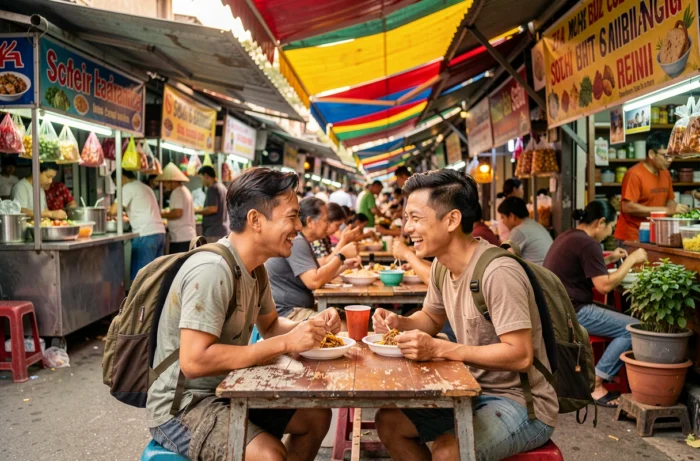
- Eating like locals (markets, neighborhood canteens, street food) divides the food budget by two or three compared to restaurants listed in tourist guides.
- Using a bank card without foreign exchange fees avoids the commissions that accumulate over dozens of withdrawals abroad.
- Favoring free activities (hiking, beaches, neighborhood visits, open temples) rather than organized excursions helps maintain a sustainable spending pace over several months.
The common mistake is to compress the accommodation and transport budget and then let go on extras. A cocktail every night for six months is equivalent to a lost long-haul flight.
The real lever for an economical round-the-world trip is daily discipline, not the search for the miracle fare before departure. Travelers who stick to their budget over time are those who track their expenses week after week, adjust their itinerary based on the remaining balance, and accept to skip a stage if the numbers no longer add up.