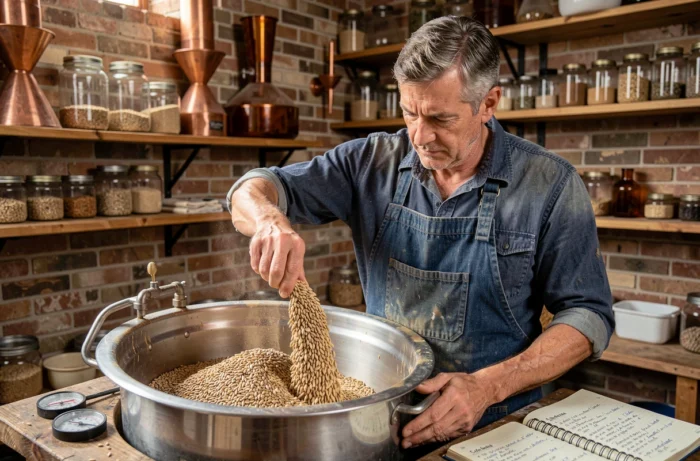
Transforming grains into whisky at home is a dream for many spirit enthusiasts. Homemade whisky promises a unique experience, from grain to glass. However, before gathering any equipment, one question deserves your full attention: do you have the right to distill in your country?
Home Distillation: What the Law Really Allows
Most guides on homemade whisky gloss over this step in a few lines. This is a mistake. Distilling alcohol at home remains illegal in the majority of countries, and the penalties are not symbolic.
In the United States, home distillation is federally prohibited. Courts have recently upheld this ban, and legal disputes are still ongoing in 2026. A proposed law (House Bill 10157) aims to allow limited production, but it has not yet come to fruition. In the meantime, producing whisky at home exposes you to real criminal prosecution.
In France, the situation is different but equally regulated. Home distillation requires a specific authorization. The famous “privilege of the distiller” has been removed for new beneficiaries, and any production without prior declaration to customs constitutes an offense. Producing spirits without the appropriate beverage license can lead to the seizure of equipment and fines.
Several steps described in this article, such as fermentation, remain legal in most jurisdictions. It is the distillation, the transition from fermented mash to concentrated alcohol, that poses a problem. Check local legislation before investing in a still. Practical details of the production process are described on the Capitaine Comment? website for those who wish to go further.
Safety Risks of Home Distillation
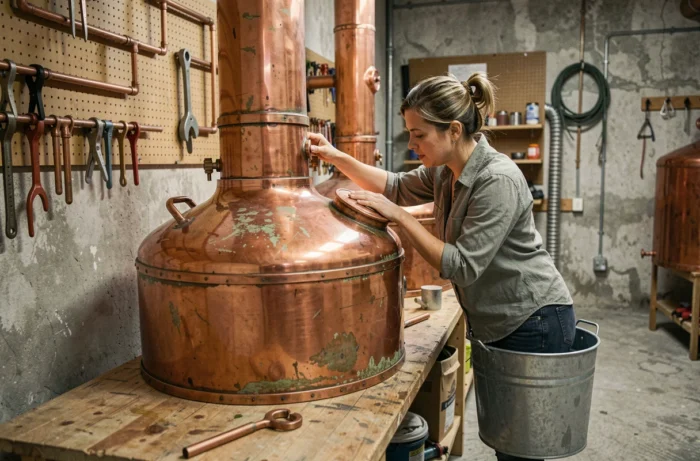
Beyond the legal framework, amateur distillation carries physical dangers that online tutorials often underestimate. A poorly designed or improperly used still can cause a fire or even an explosion.
Alcohol is a flammable liquid. Heating fermented mash to extract ethanol vapors requires precise temperature control. Overheating, steam leaks near an open flame, or a faulty connection can trigger a serious accident.
Methanol, a Toxic Byproduct
Fermentation naturally produces small amounts of methanol, in addition to the desired ethanol. Methanol is toxic even in small doses: it can cause blindness or fatal poisoning. Professional distilleries eliminate this fraction (the “heads”) through strict protocols and calibrated equipment.
A beginner without training or appropriate measuring instruments takes a real risk by consuming or letting others taste their production. Recent legal and technical sources emphasize this point: distillation is not just a simple DIY setup.
Making Whisky Mash: Grains, Water, and Fermentation
The first phase of whisky production, which is perfectly legal, involves preparing a fermented mash from grains. This is where much of the aromatic profile of your future spirit is determined.
Choosing and Preparing the Grains
Whisky can be made from several grains: barley, wheat, rye, or corn. Malted barley remains the classic choice, especially for single malt. Here are the preparation steps:
- The grains are soaked in water and then aerated repeatedly for about two days, triggering germination and increasing the moisture content of the grain.
- Germination produces enzymes (notably amylase) that break down starch into fermentable sugars. This transformation makes fermentation possible.
- The germinated grains are then dried, sometimes smoked (which is the origin of the peaty character of some Scotch whiskies), and then crushed to obtain usable malt.
The quality of the water directly influences the taste of the mash. Low-mineral spring water generally yields better results than heavily chlorinated tap water.
Fermentation: Turning Sugar into Alcohol
The crushed malt is mixed with hot water to form a mash. This mashing step activates the enzymes and converts the remaining starch into simple sugars. The sweet liquid obtained after filtration is called “wort.”
Yeast is then added. Yeast consumes the sugars and produces ethanol as well as carbon dioxide. Fermentation generally lasts a few days. The result is a low-alcohol liquid, comparable to an unhopped beer, called “wash.”
This fermentation step is where the amateur can experiment freely. The choice of yeast strain, fermentation temperature, and duration directly influence the aromas. A well-conducted wash will yield a cleaner and more expressive distillate after distillation.
Aging Whisky in Cask: Patience and Wood Selection
Even if you do not distill yourself (out of respect for the law or caution), understanding aging allows you to appreciate what makes the difference between an ordinary whisky and a grand cru.
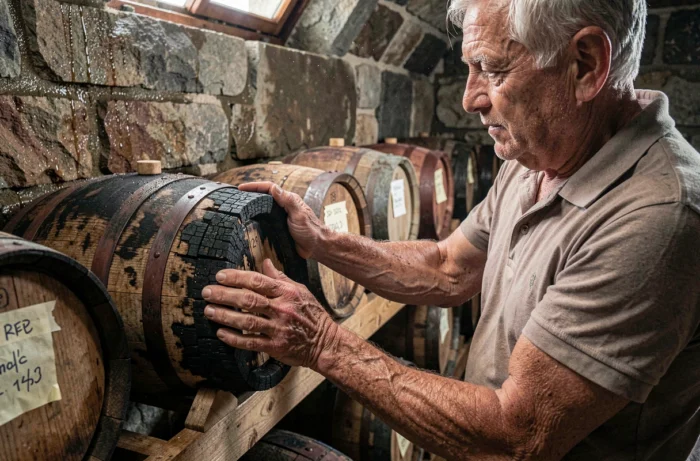
The colorless distillate that comes out of the still cannot yet be called whisky. Aging in oak cask is mandatory in almost all global regulations. It is in the wood that the spirit acquires its amber color, notes of vanilla, caramel, or spices.
- A new oak cask imparts marked tannins and intense woody aromas, suitable for American bourbons.
- A cask that has contained sherry, cognac, or red wine imparts more subtle fruity or spicy notes, prized for Scotch single malts.
- The size of the cask matters: the smaller the volume, the more significant the wood-liquid contact is proportionally, and the faster the aging.
Distilleries like Kilchoman offer editions aged in cognac casks, which illustrates the impact of wood selection on the final result.
Whisky Creation Workshops: A Legal and Educational Alternative
For those deterred by regulations or technical risks, whisky blending workshops offer a concrete entry point. Houses like Benjamin Kuentz provide guided experiences where you learn to taste, write a recipe, and blend your own whisky from selections of casks.
A supervised workshop allows you to understand the mechanisms of whisky without legal risk or physical danger. You leave with a personalized bottle and, most importantly, with a sensory understanding of the product that reading alone cannot provide.
Homemade whisky remains a fascinating project, as long as you distinguish between what falls under legal experimentation (fermentation, tasting, blending) and what requires formal authorization. Before connecting a still, check with your country’s customs. The best whisky is the one you can enjoy without ending up in court.