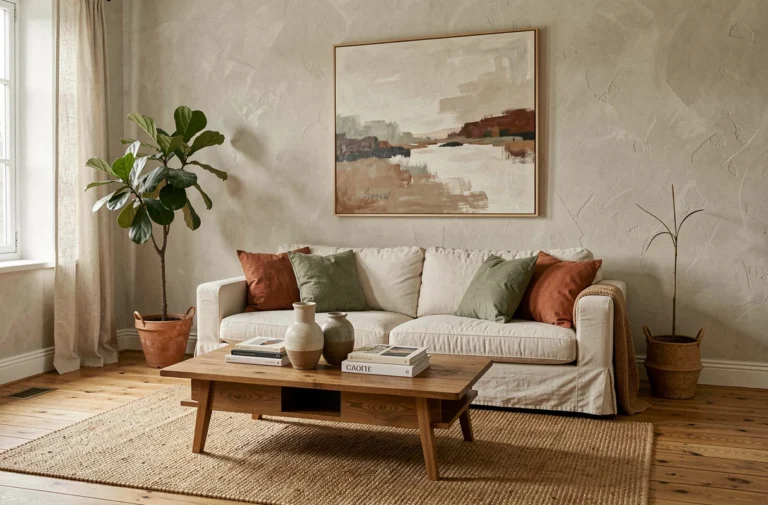
A decoration blog that accumulates articles over the months eventually poses a concrete problem: finding specific content becomes laborious. Classic categories (living room, bedroom, office) are no longer sufficient when the volume of publications exceeds several dozen pages. The sitemap, sometimes neglected by readers as well as by editors, offers a direct access point to all published content.
Click Depth and Access to Buried Decoration Content
Recent technical recommendations emphasize a simple principle: every important page should be accessible within three clicks maximum from the homepage. On a decor blog that regularly publishes features on interior design, bedroom design, or living room ideas, the oldest articles mechanically slide deeper into the hierarchy.
A classic navigation menu only offers the main categories. To reach an article published six months ago on designing an office space, one often has to go through pagination, click multiple times, or even resort to the internal search engine. The sitemap circumvents this process.
It lists all pages and articles on a single plan. Each link points directly to the content, without an intermediary layer. For a decor blog structured by rooms in the house (living room, dining room, bedroom, office), this flattened format allows you to spot a topic in a matter of seconds. You can also view the sitemap of Le Blog Déco De Marie-Carotte to see this functionality in a concrete example.

HTML Sitemap and XML Sitemap: Two Distinct Navigation Tools
The confusion between these two formats persists. The XML sitemap is a technical file intended for search engines. It tells Google which pages exist and how often they are updated. A human visitor never consults it directly.
The HTML sitemap, which concerns us here, is a web page readable by any internet user. It presents the complete structure of the blog in the form of clickable links, organized by theme or publication date.
- The XML sitemap improves technical indexing and the discovery of new pages by Google bots, without a direct impact on the reading experience.
- The HTML sitemap provides an overview to the visitor, allowing them to spot articles they might not have found through standard navigation.
- Both formats are complementary: the first serves SEO, the second serves human navigation and reduces click depth.
On a decor blog rich in visuals, the internal linking created by the HTML sitemap also strengthens SEO. Each link to an article on living room decoration or bedroom furniture prices redistributes weight to deeper pages.
Responsiveness and Navigation Performance on an Image-Rich Blog
Since March 2024, Google measures page responsiveness with the INP (Interaction to Next Paint) indicator, which replaces the old FID. This metric evaluates the page’s response time to each user interaction, not just the first one.
A decor blog naturally loads many high-resolution images. Complex menus with hover animations, mega-menus in JavaScript, or galleries integrated into the navigation increase response time. The threshold considered satisfactory is under 200 ms.
The HTML sitemap has a clear technical advantage in this regard. It is a lightweight page, composed mainly of text and links. No carousel, no heavy scripts, no animations. The response time remains minimal even on mobile, which helps maintain a correct INP score for the entire site.
For a reader looking for a specific article on room design or interior design ideas, going through the sitemap rather than a dropdown menu loaded with visuals significantly reduces access time.

Using the Sitemap as a Thematic Discovery Tool
Navigation by categories imposes a linear path: you choose “living room,” then browse the articles in that section. The sitemap allows for a different, more transversal use.
By displaying all article titles on a single page, it makes visible connections between topics that classic navigation obscures. A reader looking for ideas for their dining room can spot an article on choosing wooden furniture that also applies to their office project. A feature on designing a home workspace can intersect with an article on arranging a convertible guest room.
The sitemap functions like a magazine table of contents, where one browses all topics before diving into an article. This mode of consultation encourages longer visits and the discovery of content that the reader might not have spontaneously searched for.
When Internal Search Is Not Enough
The search engine integrated into a blog assumes that the visitor already knows what they are looking for. One must type a specific keyword: “children’s bedroom decoration,” “Scandinavian sofa price,” “rectangular living room plan.” If the exact term does not match the article title, the result may be empty or not very relevant.
The sitemap requires no queries. It exposes the entire editorial catalog. For a decor blog that covers various topics (decoration ideas, room layout, price comparisons, design trends), this complete visibility reduces the risk of missing out on useful content.
The best-structured decor blogs combine both approaches: a search bar for targeted queries and a sitemap for free exploration. The complementarity between these two navigation modes covers the majority of reading behaviors, whether the visitor arrives with a precise idea or simply looking for inspiration for their home.