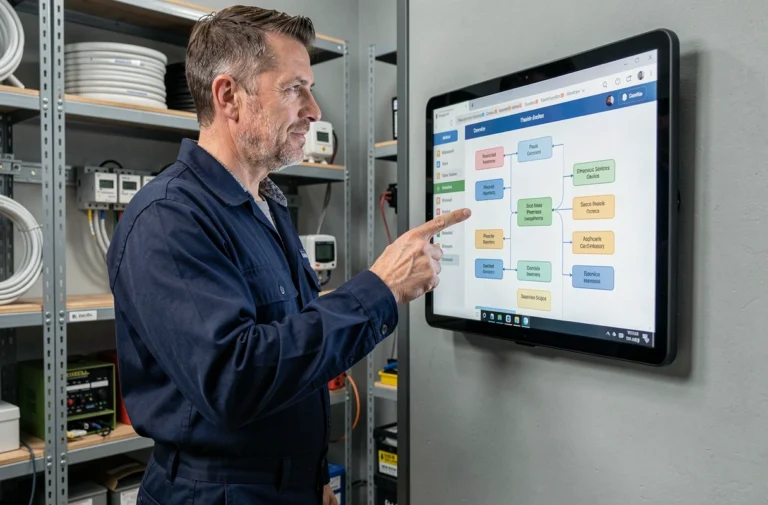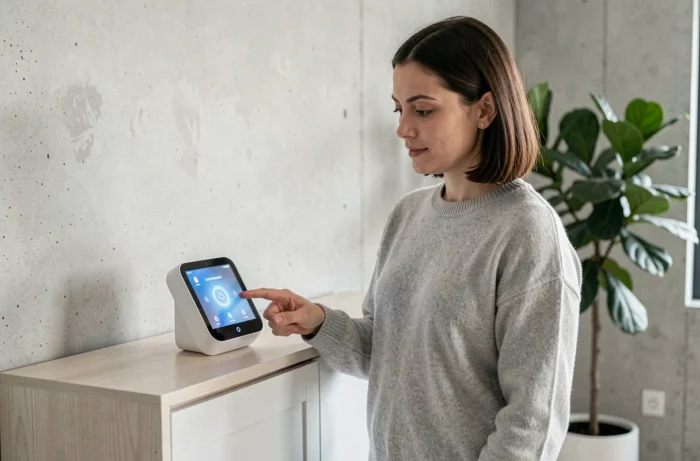
A connected smart device is a physical device equipped with sensors, embedded processing capability, and a network communication module that allows it to exchange data without direct human intervention. This sensor-processor-connectivity combination distinguishes a connected object from a simple programmable electronic device. Understanding this technical triptych helps to grasp why these devices are transforming both home management and industrial environments.
Data Lifecycle in an IoT Connected Device
Most content describes connected objects by their uses. Starting from the data itself sheds more light on their actual functioning. Each interaction of a smart device follows a four-step process: collection, transmission, processing, action.
Collection relies on physical or software sensors: temperature, accelerometer, brightness, motion detection, or even audio stream analysis. The sensor converts an analog phenomenon into a usable digital signal.
Transmission uses a protocol suited to the range and energy consumption of the device. Wi-Fi and Bluetooth cover short-range home uses. Cellular networks or low-power wide-area networks (LPWAN) serve deployments over long distances, typical of agricultural sensors or urban meters. The choice of protocol conditions battery life and the frequency of data transmission.
Processing can occur locally, on the embedded microcontroller, or remotely on a cloud platform. When latency matters (emergency braking of a vehicle, fire alarm), the computation is done as close to the sensor as possible. For trend analysis over several weeks of data, the cloud takes over.
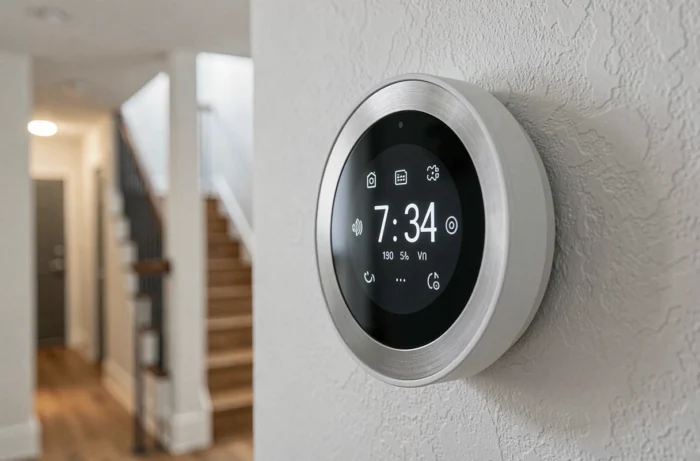
The final action closes the loop: a connected thermostat adjusts the temperature, an industrial valve closes, a notification arrives on a smartphone. It is this complete loop that elevates an object from the status of a passive sensor to that of a smart device capable of automating a decision. To delve deeper into the definition of connected smart devices, this distinction between local and remote processing remains the most structuring technical point.

Communication Protocols: What Separates a Reliable Connected Object from a Gadget
Two connected devices that appear identical can offer radically different experiences depending on their communication protocol. This technical parameter, rarely highlighted on packaging, determines the range, consumption, and compatibility of the device.
Short-Range Protocols for the Connected Home
Wi-Fi offers high throughput, suitable for security cameras or connected speakers that stream content continuously. Its downside: energy consumption that requires a power supply or frequent recharges.
Bluetooth Low Energy (BLE) is suitable for wearable objects (watches, health sensors) due to its low consumption. Its range remains limited to a few dozen meters, confining it to close-range use.
Zigbee and Z-Wave, less known to the general public, create mesh networks where each device relays the signal from its neighbors. A Zigbee mesh network can cover an entire house with connected LED lighting, opening detectors, and temperature sensors, without relying on a single Wi-Fi access point.
Long-Range Protocols for Remote Systems
LPWAN networks (LoRaWAN, Sigfox, NB-IoT) transmit small volumes of data over several kilometers with battery life measured in years. These protocols equip connected water meters, urban air quality sensors, or geolocation beacons for logistics containers.
The protocol is not chosen after purchase: it is integrated into the hardware. Checking protocol compatibility before any investment prevents ending up with devices that cannot communicate with each other.
Cyber Resilience Act: The New Regulatory Landscape for Connected Devices in Europe
Regulation (EU) 2024/2847, known as the Cyber Resilience Act (CRA), came into effect on December 10, 2024. It imposes horizontal cybersecurity requirements for the first time on all “products containing digital elements,” a category that encompasses the majority of connected smart devices.
Specifically, starting from December 11, 2027, only products demonstrating compliance (secure design, software updates, vulnerability management throughout the lifecycle) and bearing the CE CRA marking will be allowed to be marketed in the European market. The obligations for notifying vulnerabilities will be phased in, with initial deadlines as early as September 11, 2026, for reporting security flaws.
This framework changes the game for both manufacturers and buyers:
- A manufacturer that ceases security updates for a connected device must declare it and can no longer sell the product as compliant, reducing the risk of “abandoned” objects on the network.
- Distributors will need to verify CRA compliance before listing a product, effectively filtering out the least secure devices.
- The buyer will have the CE CRA marking as a security indicator, comparable to what the standard CE marking represents for the physical safety of products.
Data Security and Interoperability of Connected Systems
The proliferation of connected devices in the same environment (home, office, factory) raises two concrete issues that the CRA alone does not resolve: the management of personal data and interoperability between brands.
On the data side, each sensor generates a continuous stream of information. A thermostat records presence habits, a security camera captures images, a health bracelet measures heart rate. The GDPR regulates the collection and storage of this data, but practical responsibility lies in the initial configuration: disabling unnecessary data sharing at installation reduces the exposure surface.
On the interoperability side, the Matter standard, supported by Apple, Google, Amazon, and Samsung among others, aims to allow objects from different brands to work together without a dedicated gateway. Adoption of Matter is progressing, but many already installed devices remain on proprietary protocols. Before expanding an existing home automation system, checking the Matter or Zigbee compatibility of the new device with the existing hub avoids unnecessary purchases.
The European Data Act adds an additional layer by imposing “access by design”: manufacturers will need to design their products so that users can retrieve and transfer their data to another service. This obligation gradually transforms the dependency relationship between the user and the manufacturer’s ecosystem.
The next wave of connected devices will be defined as much by its regulatory framework as by its technical capabilities. The CE CRA marking, the Data Act, and the Matter standard outline an environment where compliance, data portability, and interoperability become as critical selection criteria as price or features.