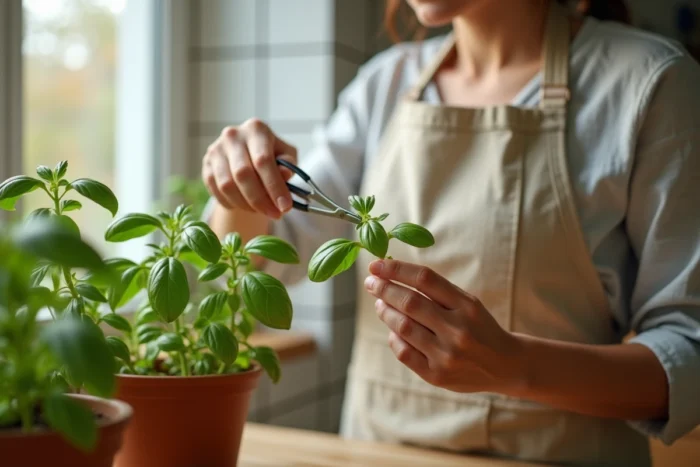
Cutting basil at the wrong spot on the stem means removing the axillary buds that ensure branching. The result: a plant that grows tall, produces fewer leaves, and flowers prematurely. Here, we detail the pruning techniques that make the difference between a weak plant and a dense, productive bush.
Pinching the basil’s apex: the technical gesture that conditions branching
The main stem of basil exhibits marked apical dominance. As long as the terminal meristem remains intact, the axillary buds located at each node remain dormant. Pinching the apex above a pair of leaves lifts this inhibition and forces the plant to develop two new lateral stems from the immediately lower node.
We recommend performing this first pinch as soon as the plant reaches six pairs of leaves. Waiting longer allows the stem to lignify, which slows the emergence of lateral buds.
Each new branching can in turn be pinched according to the same principle. After three successive pinching cycles, a single plant can bear a dozen productive stems. Knowing how to cut basil correctly at this stage ensures a compact growth habit and maximum leaf surface area.
The pinching is done by hand, between the thumb and index finger, or with clean pruning shears. A sharp tool is preferable on already semi-woody stems to avoid crushing the vascular tissues.
Cutting basil during a heatwave: adapting pruning to the heat
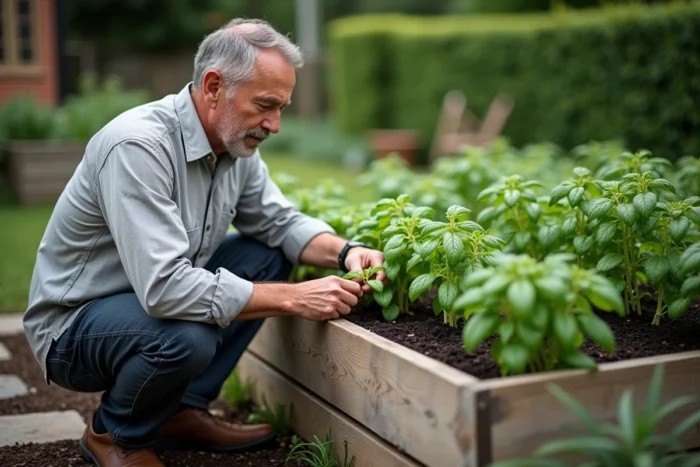
Most guides recommend regular pinching regardless of the season. On a south-facing balcony in summer, a structural pruning during a heatwave can cause the plant to wither. The remaining leaf surface is no longer sufficient to ensure the photosynthesis and evapotranspiration necessary for the plant’s survival under high heat.
During temperature peaks, we limit harvesting to isolated leaves, taken one by one from the most abundant stems. Training prunings (pinching the apices, cutting back entire stems) are postponed to periods when the temperature drops and regular watering compensates for the loss of foliage.
Warning signs after excessive cutting
- Rapid wilting of the remaining leaves despite a moist substrate, indicating that the plant can no longer regulate its temperature
- Brown discoloration of the cut nodes within hours, indicating localized water stress
- Complete halt of growth for several days while watering conditions are maintained
If these symptoms appear, move the pot to partial shade and suspend all harvesting until vegetative recovery.
Removing flower spikes: where to cut to prolong leaf production
When basil initiates its flowering, it redirects its energy towards seed production. The leaves become smaller, tougher, and develop a bitterness that makes them less appealing in cooking. Removing flower spikes as soon as they appear extends the vegetative phase by several weeks.
The cutting point is just above the first pair of leaves below the spike. Cutting lower is unnecessary and reduces the productive leaf surface. Cutting too high leaves a section of stem that dries out and can become an entry point for pathogens.
Frequency of stem inspection
In the height of the season, flower buds can appear within days on the earliest varieties. We inspect the plants twice a week, lifting the upper leaves to spot the beginnings of spikes still hidden in the center of the apical rosette.
Basil flowers are not to be discarded. They remain edible and concentrate essential oils. Using them in infusions or as decoration allows for no waste while keeping the plant in leaf production mode.
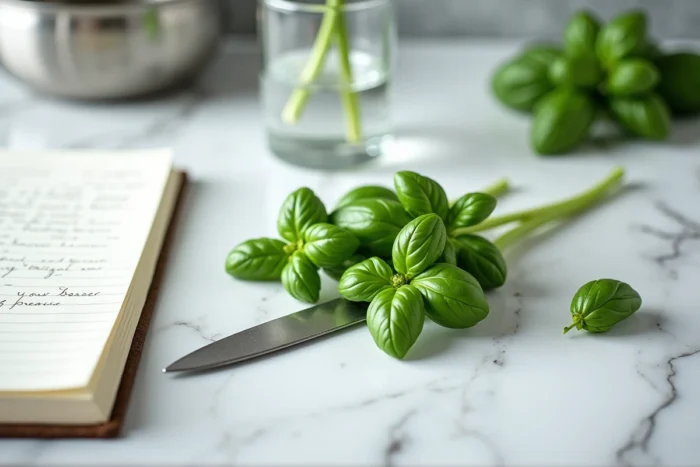
Cutting height and stem rotation: structuring the harvest on a potted basil plant
Never harvest more than one third of the total foliage in a single harvest. This rule applies regardless of the cultivation method, in pots or in the ground. Beyond that, the plant enters stress and regrowth slows significantly.
On a well-branched plant, the most effective method is to rotate around the stems. During each harvest, we take from different branches than those cut the previous time. The already cut stems thus have time to develop their new shoots before being harvested again.
- Always cut above a node bearing at least two leaves, never below the last leaf-bearing node
- Prefer the tallest stems to maintain a uniform growth habit and prevent some branches from monopolizing the light
- Harvest in the morning, when the concentration of essential oils in the leaves is at its maximum
- Use clean pruning shears or scissors rather than tearing the stems, which damages the collar
Special case of basil bought at the supermarket
These pots often contain several dozen seedlings crammed into an insufficient volume of substrate. Before pruning, we separate the seedlings into groups of three or four and repot them into individual containers. Pruning a supermarket pot without dividing it beforehand rarely produces satisfactory regrowth due to lack of root space.
The regrowth of basil relies on simple but demanding principles in terms of regularity. Pinching at the right node, adapting the cut to climatic conditions, and distributing the harvest among the stems are enough to transform a fragile plant into a source of continuous harvest throughout the beautiful season.